
How to Choose a Road Bike: A Guide for Vancouver Riders
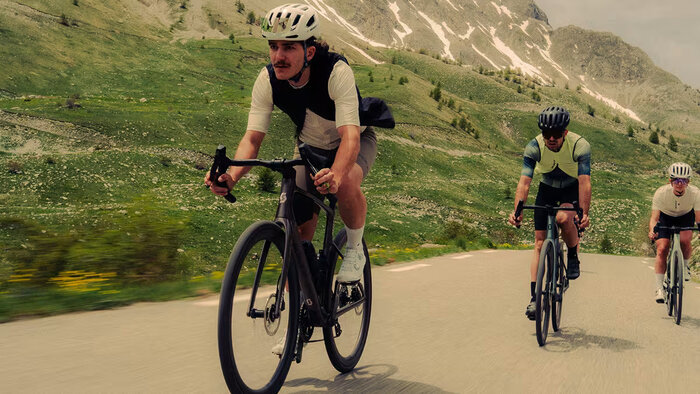
Choosing a road bike comes down to four things: how you plan to ride, the terrain you'll cover, your budget, and the size that actually fits. Vancouver's riding conditions add an extra layer, particularly with wet roads and the range of pavement quality between the Seawall and Marine Drive. This guide covers what you need to make a confident decision and avoid the most common buying mistakes.
What Makes a Road Bike Different?
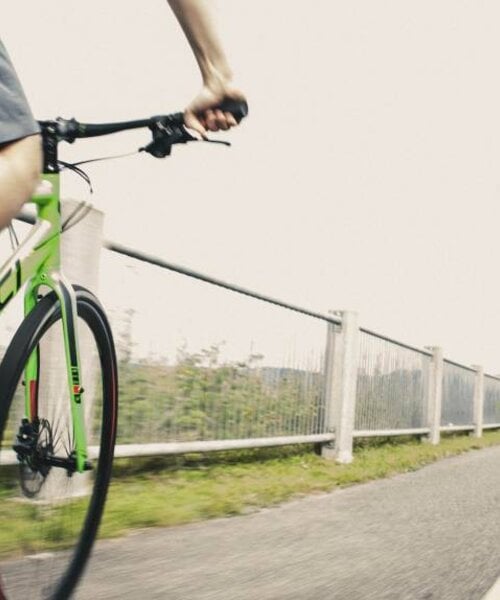
Road bikes are built for paved surfaces. They're lighter than mountain bikes or hybrids, run narrow tyres, and use drop handlebars that let you shift your grip between a more upright position and a lower, faster one. The result is a bike that covers ground more efficiently on smooth roads than any other type, with less effort per kilometre.
What road bikes trade for that efficiency: comfort over rough ground and the ability to go off-pavement. On Vancouver's mix of smooth bike lanes, patchy side streets, and the occasional gravel connector, that tradeoff matters, which is why the choice between a road bike and a gravel bike comes up constantly for riders here.
Performance vs. Endurance: Which Type Fits Your Riding?
Road bikes split into two main categories, and getting this right early saves you from buying twice.
Performance (race) geometry puts you in a lower, stretched-out position that's faster and more aerodynamic. The handling is sharp and responsive. For experienced riders doing fast group rides, time trials, or racing, this is the right setup. For someone just getting started, the position can feel punishing on anything over an hour.
Endurance geometry raises the front end slightly and shortens the reach, putting you in a more upright position without making the bike slow. Endurance bikes tend to have a bit more tyre clearance as well, which makes a real difference on Vancouver roads that aren't perfectly smooth. For most recreational riders, weekend cyclists, and anyone covering longer distances on mixed pavement, endurance geometry is the better fit.
Frame Material: Aluminum or Carbon Fibre?
Most road bikes in the $1,000 to $3,500 range are aluminum, and that's not a compromise. Good aluminum frames are light, stiff, and absorb road vibration well, particularly when paired with a carbon fork, which most include. The ride is firm but not punishing.
Carbon fibre frames are lighter and can be engineered for specific flex patterns, giving better vibration damping over longer rides. They start around $2,500 to $3,000 for a complete bike at that level. One caution: an entry-level carbon frame with budget components often gives you less value than a higher-spec aluminum bike at the same price. Frame material matters, but the groupset and wheels on the bike matter just as much.
Steel and titanium frames exist and are worth knowing about. Steel is heavier but very durable, with a ride quality that many experienced cyclists prefer. Titanium is lighter, corrosion-resistant, and expensive. Both suit riders building something to last decades rather than a few seasons.
Disc Brakes vs. Rim Brakes
Disc brakes use a rotor attached to the wheel hub and a hydraulic caliper to stop the bike. Rim brakes clamp directly onto the wheel rim. For new road bikes, hydraulic disc brakes are now the standard, and for good reason.
In wet conditions, disc brakes modulate significantly better than rim brakes, a performance difference that's well established across independent cycling tests. For Vancouver, where wet roads run from October through April and where many rides involve descending toward the water or coming off a hill in the rain, that consistent stopping power matters. Disc brakes also accept wider tyres, which opens up more options.
The tradeoff: disc brake wheels are not interchangeable with rim brake wheels, and disc systems add a bit of weight. For a new purchase, disc brakes are worth it. A well-maintained used rim brake bike at an excellent price is still worth considering, but it's the exception rather than the starting point.
Groupsets and Gearing: What to Look For
A groupset is the integrated set of components handling your braking and shifting: the derailleurs, brake levers, shift levers, cassette, and chainrings. It largely determines how the bike feels to ride and how reliable it is over time.
The two major road groupset manufacturers are Shimano and SRAM. Shimano's lineup runs from Claris at entry level through Tiagra, 105, Ultegra, and Dura-Ace. SRAM equivalents run Apex, Rival, Force, and Red. Quality, precision, and weight all improve significantly at each tier.
For most buyers, Shimano 105 is the quality threshold worth targeting. It shifts cleanly, holds up under regular use, and replacement parts are widely available. Shimano Tiagra is a solid choice at a lower price point. Components below Tiagra work, but wear and shift quality become more noticeable over time.
Gearing range also matters for Vancouver's hills. Compact cranksets (50/34 chainrings) paired with an 11-32 or 11-34 cassette give you a low enough gear to climb without grinding. Most endurance bikes come configured this way. Check before buying if hills are part of your regular route.
Getting the Right Size
Frame size is measured by the seat tube length, typically in centimetres, and ranges from around 47cm to 62cm depending on the brand. Height charts are a reasonable starting point. The numbers that matter more for actual comfort are stack (how tall the front end sits) and reach (how far forward you extend to the bars).
Two riders of the same height with different proportions will fit the same frame size very differently. The best approach is to test ride the bike. A good bike shop fits you before you buy, adjusts the saddle height, and gets you out on the road for ten or fifteen minutes, not just around a parking lot. If the shop doesn't offer that conversation, find another one.
Women's-specific road bikes are available from several brands. They typically feature a shorter top tube and shorter reach, reflecting proportional differences that affect comfort over longer rides. Worth trying both options before deciding.
What Should You Budget for a Road Bike in Canada?
Expect to spend at least $1,200 to $1,500 for a road bike worth riding, with aluminum frames and entry-level groupsets in that range. Bikes with Shimano 105 and hydraulic disc brakes typically start around $1,800 to $2,500. Carbon frames with mid-tier groupsets run from $3,000 upward. Above $5,000, the gains are real but narrow, and most non-racing riders don't fully notice them.
Budget an additional $200 to $300 for pedals and cycling shoes (most road bikes ship without pedals), and add a helmet, lock, and lights before your first ride. BC law requires helmets for all cyclists on public roads regardless of age, so don't skip that line item.
Road Bike, Gravel Bike, or Hybrid? Knowing When to Reconsider
If your riding will take you beyond smooth pavement even occasionally, a gravel bike might be the better choice. Gravel bikes handle everything a road bike can, plus gravel trails, packed dirt, and rougher connectors. Vancouver riders who want to ride the Seawall to Pacific Spirit, cut through the British Properties, or head out toward the Valley on mixed surfaces often find a gravel bike covers more of what they actually need without compromise.
Road bikes are faster and lighter on smooth pavement. Gravel bikes are more versatile. Hybrids sit between both and suit casual city riding and commuting better than longer weekend rides or athletic goals.
If you're not sure, come in and talk through your actual riding plans. The right bike depends on where you ride, how often, and what you want to get out of it.
Frequently Asked Questions
How do I know what road bike size I need?
Start with the manufacturer's size chart, which maps your height to a frame size. From there, the most reliable test is a fit session at a bike shop. Get on the bike, have the seat adjusted, and ride it. A well-fitting bike feels immediately more natural than one that doesn't.
Is a 28mm tyre better than a 25mm for Vancouver roads?
For most Vancouver riders, yes. Wider tyres run at slightly lower pressure, smoothing out rough pavement and improving grip in the wet. Most modern road bikes have clearance for 28mm and some accept 32mm. Check the frame's tyre clearance before swapping.
Do I need clipless pedals on a road bike?
Not immediately, but they improve pedalling efficiency significantly. Many riders start on flat pedals and switch to clipless once they've built confidence on the bike. Most road bikes ship without pedals, so factor that into your initial budget.
What road bike brands does Westside carry?
We carry Scott and BMC at Westside, both offering road bike lines across multiple price points, from aluminum endurance bikes for newer riders to carbon options for experienced cyclists.
Ready to find your bike? Browse our road bikes online, or come see us at 1855 W 4th Ave in Kitsilano. If you're still deciding between road and gravel, our team will help you sort it out. Once you've got your bike, check out Vancouver's best riding routes to get you started.