
Hardtail vs Full Suspension Mountain Bikes: Which Is Right for You
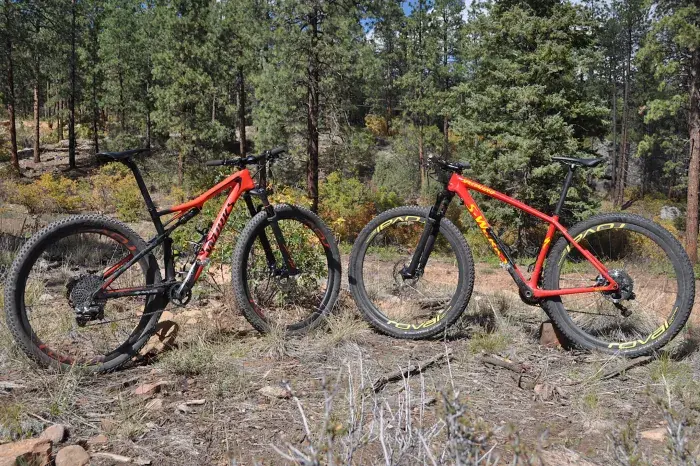
Hardtail vs full suspension comes down to one trade-off: a hardtail is lighter, cheaper, and more efficient to pedal, while full suspension is more comfortable and more capable once the trail gets rough. If most of your riding happens on the North Shore or anywhere technical, the rear shock earns its keep fast. If you're riding smoother singletrack or building skills on a budget, a hardtail does the job for less money and less maintenance.
What's Actually Different
A hardtail has a suspension fork up front and a rigid frame in the back. A full suspension bike adds a rear shock connected through a linkage, so both wheels can move independently over rough ground. That rear shock is the whole difference. It's what lets a full suspension bike keep the back wheel tracking the dirt through roots and rock gardens instead of bouncing off them.
Hardtail vs Full Suspension at a Glance
| Factor | Hardtail | Full Suspension |
|---|---|---|
| Weight | Lighter, fewer moving parts | Heavier due to rear shock and linkage |
| Climbing | More efficient power transfer | Slightly less efficient, though modern designs minimize this |
| Descending | Rougher on technical terrain | Smoother, more controlled, more confidence-inspiring |
| Maintenance | Simple, low cost | More components to service and maintain |
| Price | More affordable at a given spec level | Higher cost for comparable components |
| Best for | Smoother trails, climbing, skill-building, tighter budgets | Technical terrain, rock gardens, aggressive descending |
When a Hardtail Makes Sense
A hardtail is the smarter buy if you're new to mountain biking, riding mostly moderate trails, or watching your budget. You get a lighter bike that climbs efficiently and needs far less maintenance since there's no rear shock to service. Hardtails also force you to pick smarter lines and manage your body position, which builds skills that carry over no matter what you ride later. If your riding is mostly forest roads, buffed singletrack, or you're commuting on mixed terrain, a hardtail covers it without the added cost.
When Full Suspension Makes Sense
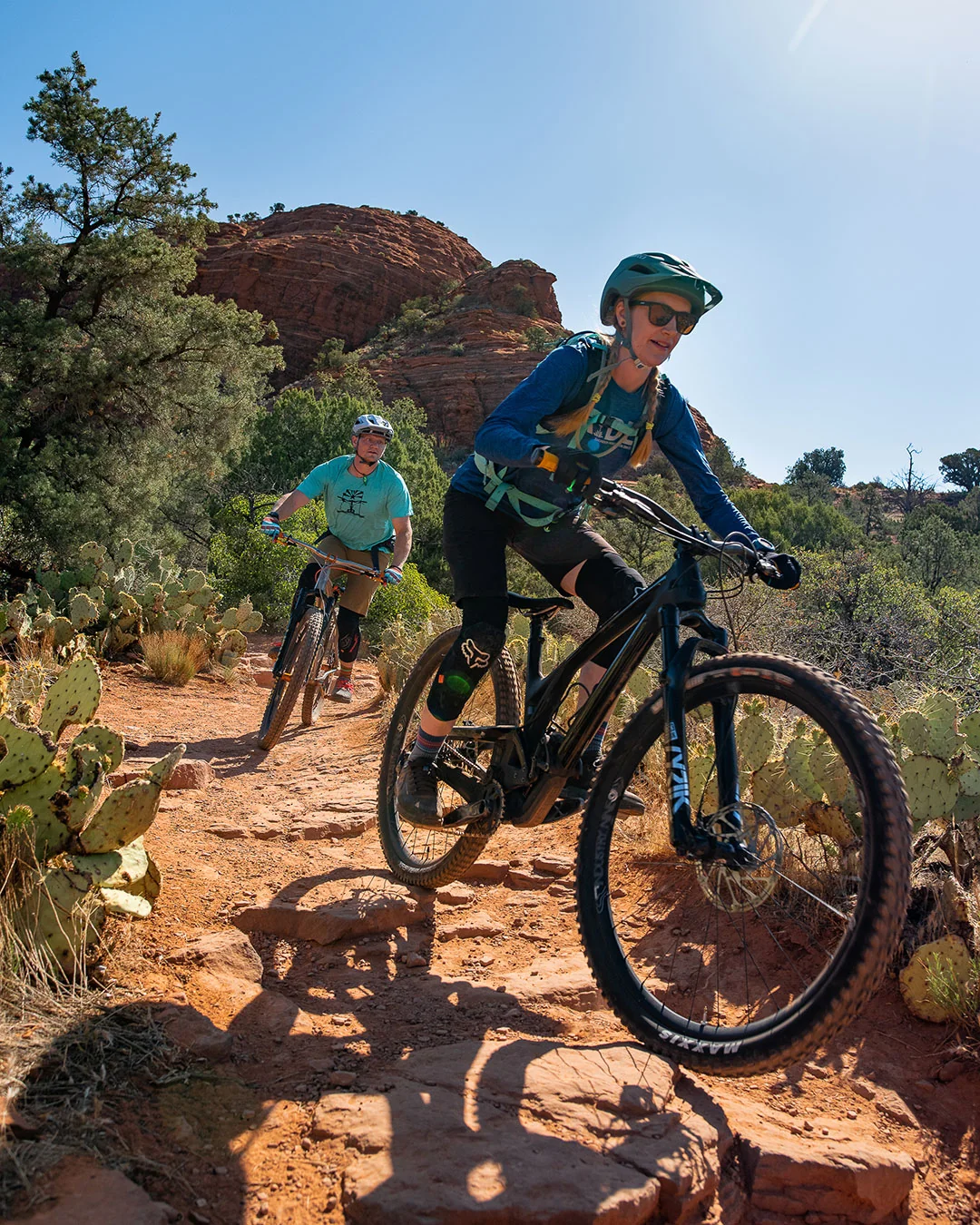
Full suspension earns its price premium the moment the trail gets technical. Vancouver's North Shore trails are known for roots, rock rolls, and steep, sustained descents, exactly the terrain where a rear shock keeps your back wheel planted and reduces the fatigue of absorbing every hit through your body.
If you're already riding, or plan to ride, anything in that category regularly, full suspension will get you down the trail faster and with more control. It's also the more forgiving choice if you're still building confidence on technical descents, since the extra traction and comfort buy you a bigger margin for error.
What About Budget
At a given price point, a hardtail almost always comes with better components than a full suspension bike, since there's no rear shock and linkage eating into the budget. That means a $2,000 hardtail can out-spec a $2,000 full suspension bike on brakes, drivetrain, and wheels. If component quality matters more to you than rear suspension, that's worth factoring in before you decide.
Test Ride Both Before You Decide
Specs on a page only tell part of the story. A hardtail and a full suspension bike with nearly identical geometry can still feel completely different on the same trail, so the fastest way to settle the decision is to ride both back to back. Take each on a short loop that includes a climb, a flat section, and at least one rooty or rocky descent if you can find one nearby. You'll usually feel the difference within the first few minutes, and that's worth more than any spec sheet.
Frequently Asked Questions
Should a beginner buy a hardtail or full suspension mountain bike?
Most beginners are better served by a hardtail. It costs less, needs less maintenance, and helps you build fundamental skills before you add the complexity of a rear shock.
Is full suspension worth it for Vancouver's North Shore trails?
Yes, if you're riding technical terrain regularly. The North Shore's roots, rock rolls, and steep descents are exactly where a rear shock earns its cost in comfort and control.
Do hardtails climb better than full suspension bikes?
Generally yes. Without a rear shock absorbing pedaling energy, hardtails transfer power more directly, which makes them noticeably more efficient on sustained climbs.
Can you take a hardtail on technical trails?
You can, and plenty of skilled riders choose to. It just demands more precise line choice and takes a bigger toll on your body over a long, rough descent compared to full suspension.
Find the Right Bike for Your Trails
The right answer depends entirely on where you ride most. For a fuller breakdown of the other decisions that go into your first mountain bike, from wheel size to frame material, see our guide to choosing a mountain bike. When you're ready to compare hardtail and full suspension options side by side, browse our full mountain bike collection or come in for a test ride.