
How Waterproof Does a Ski Jacket Need to Be? Understanding Waterproof Ratings

For most skiers, a ski jacket needs a waterproof rating of at least 10,000mm, and 15,000mm or more if you ski the wet snow of the Coast Mountains often. That number shows how much water pressure the fabric can take before it leaks, so a higher number means more protection. The rating is only one piece of the picture, though, and this guide covers the rest.
What Does a Waterproof Rating Mean?
A waterproof rating, also called hydrostatic head, is measured in millimetres. In a lab test, a tube of water is pressed against the fabric, and the rating is the height of the water column the fabric holds back before it leaks. A 10,000mm jacket can hold back a column of water 10 metres tall. You'll never stand under that much water, but the number lets you compare fabrics on the same scale.
The test measures the fabric under steady pressure. In real life, pressure comes from kneeling in wet snow, sitting on a damp chairlift and carrying a pack, which is why a jacket with some margin above the minimum is worth having.
Waterproof Rating Chart for Ski Jackets
Brands and retailers draw the lines in slightly different places. This is a practical guide for skiing.

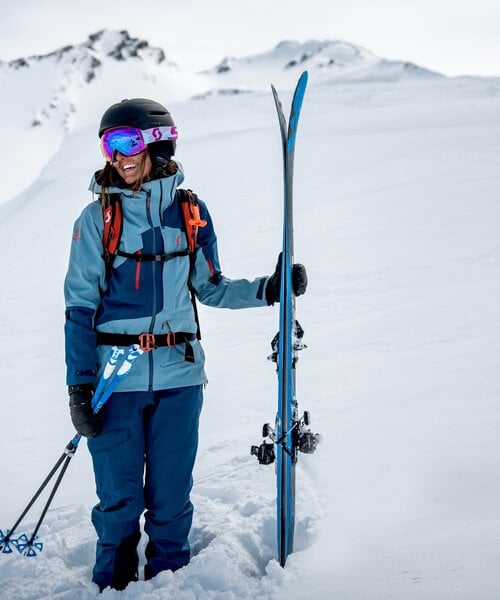
GORE-TEX in an insulated jacket for the wettest days: Scott Ultimate GTX Jacket
| Rating | What it handles | Best for |
|---|---|---|
| Under 5,000mm | Light, dry snow and a flurry | Occasional use in cold, dry weather |
| 5,000 to 10,000mm | Dry snow and short days | Casual resort days with little wet weather |
| 10,000 to 15,000mm | Most resort skiing, including some wet snow | Regular skiers, mixed conditions |
| 15,000 to 20,000mm | Wet, heavy snow and rain | Coast Mountain skiing, long days |
| 20,000mm and up | Storms and sustained wet weather | Backcountry, frequent skiers, the wettest days |
What Rating Do You Need in Vancouver?
Our local mountains are wetter than most of the country. Snow at Cypress, Grouse and Seymour is dense, the temperature often sits near freezing, and it can rain at the base while it snows up top. A jacket that's fine in dry Rockies powder can soak through here.
Our rule of thumb for Vancouver skiers is 10,000mm as the floor and 15,000mm or higher if you ski more than a handful of days a season. If you're heading out in a storm or into the backcountry, go higher still. A jacket rated 5,000mm or lower is a fair-weather option, not a coastal one.
Don't Forget Breathability
A jacket that keeps rain out but traps sweat in will leave you wet from the inside. Breathability measures how much moisture vapour passes through the fabric, usually in grams per square metre over 24 hours. Look for a rating of 10,000 g or more, and higher if you run warm or ski hard. A strong waterproof rating paired with weak breathability is a poor trade, so check both numbers on the tag.
What Else Affects How Waterproof a Jacket Is
The mm number covers the fabric. Four other details decide how the finished jacket performs in the wet.
Construction. Two-layer (2L) jackets bond the waterproof membrane to the outer fabric and use a separate liner inside. Three-layer (3L) jackets bond the membrane to both the outer fabric and an inner lining. 3L is typically lighter, more durable, and more breathable, and it's the usual choice for shells.
Seams. Every stitch hole is a potential leak, so seams are taped on the inside. Fully taped seams give the best protection on wet days. Critically taped seams cover only the exposed areas, such as the shoulders and hood.
DWR coating. A durable water repellent finish on the outside makes water bead up and roll off. It isn't the waterproof layer itself, but when it wears off, the outer fabric soaks up water and the jacket feels heavy and cold.
Zippers and hood. Look for taped or covered zippers and a hood that seals around a helmet. Water finds the gaps first.
GORE-TEX, Omni-Tech and Other Brand Names
Many brands don't print a millimetre number at all. GORE-TEX certifies its laminates as waterproof instead of quoting a rating, as on the Mountain Hardwear Cloud Bank GORE-TEX Jacket. Columbia uses its own waterproof-breathable system, Omni-Tech, across much of its ski range, and the Columbia Women's Platinum Peak Insulated Jacket is one to try on.

GORE-TEX certifies waterproofing instead of quoting a mm rating: Mountain Hardwear Women’s Cloud Bank GORE-TEX Jacket
Three-layer shells such as the Orage Women’s Apex Mtn-X Jacket and the Men’s Ultimate GTX Jacket from Scott are built for wet-weather skiing. If a tag doesn't show a rating, ask us, and we'll tell you how that jacket performs on the hill.

Omni-Tech is Columbia’s own waterproof-breathable system: Columbia Women’s Platinum Peak Insulated Jacket
Keeping Your Jacket Waterproof
Waterproof performance fades with dirt, body oils, and wear. Wash your jacket with a technical-fabric cleaner at the end of the season, then re-apply a DWR treatment when water stops beading on the surface. It's a cheap way to extend the life of a jacket.
Frequently Asked Questions
Is 10,000mm waterproof enough for skiing?
Yes, for most resort skiing. It handles dry and moderately wet snow well. If you ski often in wet coastal conditions, 15,000mm or higher gives you more margin.
Is 5,000mm waterproof enough for skiing?
Only for dry, cold days and short sessions. It will struggle in wet snow or rain, which is common on the North Shore.
Is GORE-TEX better than a 20,000mm jacket?
Not necessarily. They're measured differently, and both can keep you dry in serious conditions. Compare seams, breathability, and fit as well as the waterproofing.
What's the difference between water-resistant and waterproof?
A water-resistant fabric sheds light moisture for a short time. A waterproof fabric holds up under sustained wet conditions. For skiing, choose waterproof, and see our guide to skiing in regular winter clothes for why everyday coats fall short.
Choosing the Right Jacket
The rating tells you how much water a jacket can handle. Whether it's insulated or a shell is a separate question, covered in our guide to insulated vs shell ski jackets.
Ready to compare? Browse our women's ski jackets and men's ski jackets, or stop by the shop at 1855 W 4th Ave in Kitsilano. Our team can help you read the tags and find a jacket rated for the conditions you ski.