
Insulated vs Shell Ski Jackets: Which One Should You Buy?

The insulated vs shell ski jacket decision comes down to where you want your warmth to come from. An insulated jacket has it built in. A shell has none, so you add warmth with the layers underneath. For skiers on the North Shore, at Whistler and across the Coast Mountains, where a day can swing from wet snow to hard cold, the right pick depends on how you ski and how easily you get cold.
What Is an Insulated Ski Jacket?
An insulated ski jacket pairs a waterproof outer fabric with a layer of fill sewn in, usually synthetic and sometimes down. You pull it over a base layer and you're warm. That simplicity is why most first-time buyers start here.

Insulation and a waterproof membrane in one jacket: Men’s Mountain Hardwear Cloud Bank GORE-TEX Jacket
Synthetic fill keeps working when it gets damp, which matters on the coast, where snow is often heavy and wet. Down is lighter and warmer for its weight but loses much of its warmth when soaked, so it suits colder, drier days better. In our shop, the Orage Glades Women’s Insulated Jacket and the Men’s Mountain Hardwear Cloud Bank Gore-Tex Jacket are good examples of the style.
The trade-off is flexibility. You can’t take built-in insulation off, so on a mild March afternoon or a long lap with a hike, an insulated jacket runs hot, and venting only goes so far.
What Is a Shell Ski Jacket?
A shell is the weather barrier and nothing else. It blocks wind, snow, and rain and lets sweat vapour escape, but it carries no insulation of its own. Warmth comes from the base layer and mid layer you choose for the day. Many shells use three-layer construction, which bonds the waterproof membrane to both the outer fabric and an inner lining.

No insulation, so your layers set the warmth: Mountain Hardwear Women’s Boundary Ridge GORE-TEX Jacket
Our guide to how waterproof a ski jacket needs to be explains what the ratings on the tag actually mean.
Shells breathe better than insulated jackets, which is why they're the standard for touring and spring skiing. Examples in the shop include the Mountain Hardwear Women’s Boundary Ridge Gore-Tex Jacket, the Scott Vertic Utility 3L (men's and women's) and the Orage Apex Mtn-X Jacket.
Insulated vs Shell Ski Jacket: Side by Side
| Factor | Insulated jacket | Shell jacket |
|---|---|---|
| Warmth | Built in and fixed | Depends on your layers |
| Versatility | One comfortable temperature range | Wide range, adjust layers by the day |
| Breathability | Moderate | Typically better |
| Layers needed | Base layer only | Base layer plus a mid layer |
| Weight and bulk | Heavier, bulkier | Lighter, packs smaller |
| Best for | Cold, steady days and lift-served skiing | Variable weather, touring and spring skiing |
| Upfront cost | One purchase | Jacket, plus a mid layer if you don't own one |
How West Coast Conditions Change the Choice
Coast Mountain skiing doesn't behave like skiing in the Rockies. Temperatures near freezing are common, the snow is dense, and it can rain at the base while it snows up top. That wet, mild pattern is hard on a fixed-warmth jacket. You end up too warm on the way up or damp and chilled if you sweat through the lining. A shell and a mid layer let you adjust between runs.
A cold January night session on the North Shore is a different story. When the temperature drops and you're standing in lift lines, an insulated jacket earns its keep.
Who Should Buy an Insulated Jacket
Choose insulated if you run cold, ski mostly lift-served days, want one piece you can grab and go, or you're buying your first ski jacket and don't own good mid layers yet. It also suits skiers who spend more time standing around than moving, like parents on the bunny hill. Browse our women's ski jackets and men's ski jackets to see what's in stock.
Who Should Buy a Shell
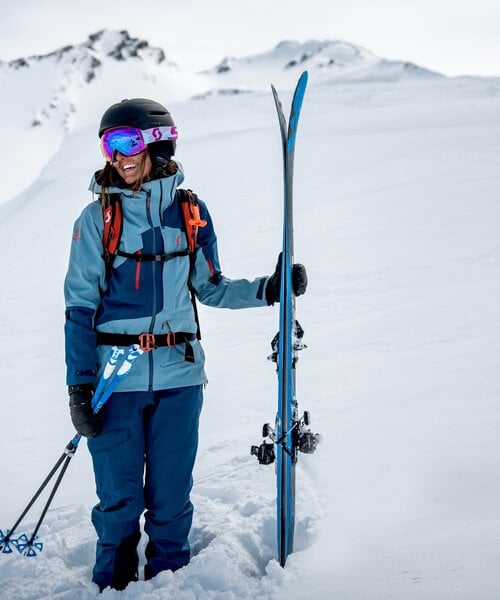
Choose a shell if you run warm, mix resort and backcountry days, ski into April, or already own a fleece or light puffy. A shell is also the better long-term buy for anyone who wants one jacket for every season. The same shell works over a thick mid layer in January and over a T-shirt in spring.
The Middle Option: 3-in-1 Jackets
Some jackets split the difference. Interchange jackets such as the Columbia Whirlibird V Interchange Jacket, Women's and Men’s, pair a shell with a zip-in liner, so you can wear them together, separately, or leave the liner at home.

A shell and a zip-in liner in one: Columbia Women’s Whirlibird V Printed Interchange Jacket
Building a Layering System Under a Shell
Start with a snug base layer that wicks moisture away from your skin. Add a mid layer for warmth: fleece for active days, a lightweight insulated layer for cold ones. We carry men's base layers and women's base layers, plus men's mid layers and women's mid layers, so you can build the whole system in one trip.
Fit and Features That Matter Either Way
Whichever style you pick, look for a powder skirt, pit zips for venting, wrist cuffs that fit over your gloves, and a hood that works with a helmet. Try the jacket on with the mid layer you plan to wear, and bring your helmet if you have one. If you need a new one, see our ski and snowboard helmets.
Frequently Asked Questions
Is a shell jacket warm enough for skiing?
A shell has no warmth of its own, so it's only as warm as the layers under it. With a wicking base layer and a fleece or light puffy underneath, it's warm enough for most resort days. Add a heavier mid layer for the coldest ones.
What do you wear under a ski shell jacket?
A moisture-wicking base layer against your skin and a mid layer on top. Fleece suits active days, and a lightweight insulated layer suits cold ones. Adjust the mid layer to the forecast.
Should I buy a shell or an insulated jacket?
Buy insulated if you run cold and ski lift-served days in steady cold. Buy a shell if you run warm, ski variable conditions, or want one jacket that works across the whole season.
Can I wear a regular winter coat instead?
For a first day or two, you might get by. Ski jackets add waterproofing, powder skirts and vents that everyday coats lack. We cover what works and what doesn't in our guide to skiing in regular winter clothes.
Still not sure which way to go? Browse our women's ski jackets and men's ski jackets, or stop by the shop at 1855 W 4th Ave in Kitsilano. Bring the mid layer you plan to wear, and our team will help you match a jacket to how you ski.